Travel Insurance for Thailand: What Scooter Riders Must Check Before Buying
Why so many scooter claims in Thailand are refused, which exclusions matter (licence category, helmet, alcohol, engine size), what a policy should cover and how to read the small print before you buy.
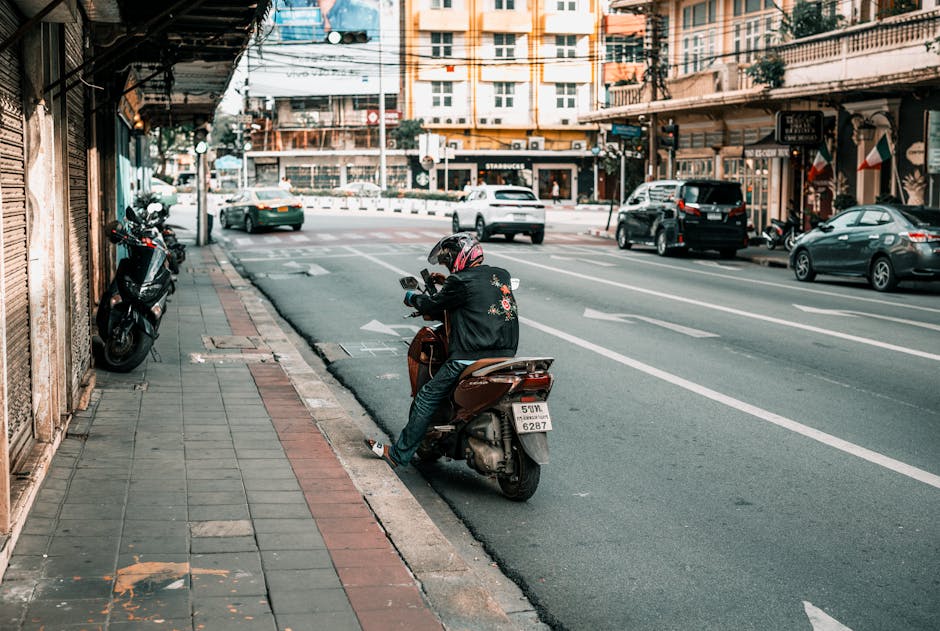
Most people buy travel insurance in two minutes and never read it. In Thailand, and in Phuket in particular, that habit can be very expensive. Road accidents involving scooters are the most common reason tourists end up in hospital here, private hospital treatment is billed at international prices, and the single most frequent reason claims are refused is not fraud or bad luck — it is a licence condition the traveller did not know about. This guide explains what to look for, especially if there is any chance you will ride a scooter or motorbike, even as a passenger.
Important: this article is general information, not legal or insurance advice. Policies differ between insurers and countries. The only document that matters is the wording of your own policy — read it, and if something is unclear, ask the insurer in writing before you travel.
Why scooter claims get refused
Almost every travel policy that covers motorbikes or scooters at all puts conditions on that cover. The typical ones:
- A valid licence for the vehicle you ride. In Thailand any scooter, including a 110–125 cc automatic, needs a motorcycle licence (category A). A car licence does not cover it, and an International Driving Permit only helps if it shows the motorcycle category. Many policies say the rider must hold a licence valid "in the country where the accident happened" or "in your home country for that class of vehicle". If you ride on a car-only licence, insurers commonly refuse the claim — this is the most frequent reason tourist claims are denied. More detail in our article on why scooter insurance claims are refused in Phuket.
- Wearing a helmet. Riding without a helmet is illegal in Thailand for rider and passenger, and policies routinely exclude injuries sustained without one.
- Alcohol and drugs. Almost every policy excludes accidents while over the legal limit. Thailand's limit is 0.05% blood alcohol for most drivers and lower for new licence holders. After an accident, police may test.
- Engine size. Some policies cover only bikes up to a certain engine size (often 125 cc); others require a higher-tier add-on for anything bigger. Many rental scooters in Phuket are 125–160 cc, so the exact limit matters.
- Rider vs passenger. Some policies cover you as a passenger but not as the rider, or the other way round.
- "Hazardous activities" add-on. Some insurers treat any motorbike riding as an optional extra that must be bought separately.
Passengers: you are not automatically safe
Many travellers assume that if their partner rides and they sit behind, the licence question does not apply to them. Some policies do cover passengers regardless of the rider's licence; others exclude injuries when the vehicle is driven by an unlicensed person, or require the passenger to wear a helmet too. Check the passenger wording separately.
What a good policy for Thailand should include
Emergency medical expenses
This is the core of the policy. Private hospitals in Phuket offer good care, but treatment after a serious road accident — surgery, intensive care, several nights in hospital — can quickly reach hundreds of thousands of baht. Choose a medical limit that would comfortably cover a serious accident and a long stay, not just a doctor's visit. Many travel-medicine sources suggest cover in the range of at least several hundred thousand US dollars or euros for long-haul trips; the exact amount is your call.
Medical evacuation and repatriation
If you need to be flown home with medical staff or transferred to another hospital, the cost can exceed the treatment itself. Make sure evacuation and repatriation are included and that the limit is realistic.
24/7 assistance and direct billing
The assistance line arranges payment guarantees with hospitals so you are not asked to pay large deposits yourself. Private hospitals in Thailand often ask for a deposit or guarantee before major treatment. Save the assistance number in your phone and on paper.
Personal liability
Liability cover protects you if you injure someone or damage their property. Note that many travel policies exclude liability arising from the use of motor vehicles, including scooters. In that case, damage you cause to another vehicle or person while riding would need to be covered by the vehicle's own motor insurance, not by your travel policy.
Excess (deductible)
Check how much you pay yourself per claim. A low premium with a high excess may make small claims pointless.
Pre-existing conditions, pregnancy, sports
If any of these apply, declare them. Undeclared conditions are a common reason for reduced or refused claims. Diving, kite-surfing, Muay Thai training and other activities may need an add-on too.
🛡️ Travel insurance for Thailand
- ✓Policy online in a few minutes
- ✓Check the scooter / active-sport option
- ✓Medical cover for Thailand hospitals
Travel insurance vs the scooter's own insurance
These are two different things that cover different risks:
- Compulsory motor insurance in Thailand (often called "Por Ror Bor") must be held for every registered vehicle. It covers a limited amount of medical costs for injured people, regardless of fault, with higher amounts in some cases. Its limits are modest compared with private hospital bills.
- Rental shop insurance, if any, usually relates to the bike itself — theft or damage — and often comes with its own excess. Many scooter rentals in Phuket offer only the compulsory cover plus a damage waiver of varying quality. Ask what exactly is covered and get it in writing.
- Your travel insurance covers your own medical costs, evacuation and so on, subject to the conditions above. It usually does not pay for damage to the rental bike.
In other words, for a scooter accident you may need two or three policies to work together, and each has its own conditions.
Checklist before you buy
- Does the policy cover riding a motorcycle or scooter at all? As rider, as passenger, or both?
- What exactly does it require: licence valid in Thailand, in your home country, or both? Does a car licence plus IDP count? (For scooters in Thailand, usually not.)
- Is there an engine-size limit? What size bike will you actually rent?
- Is a helmet explicitly required? (Assume yes.)
- What is the medical limit, and does it include evacuation and repatriation?
- Is there 24/7 assistance with direct payment to hospitals in Thailand?
- Is liability from motor vehicles excluded?
- What is the excess per claim?
- Are your other activities (diving, boat trips, trekking, Muay Thai) covered?
- Does the policy start before you leave home? Many insurers do not sell or start cover once you are already abroad, or apply a waiting period.
If you do not have a motorcycle licence
You have three honest options:
- Do not ride. Use Grab, taxis, a rental car with a car licence and IDP, or tours with transport included. See our comparison of car vs scooter safety in Phuket.
- Get the right licence. Before the trip, at home; or in Thailand — the school helps foreigners obtain a Thai category A licence in 5–7 working days, details on the Thai driving licence page.
- Ride anyway and accept the risk. Many tourists do, but you should understand that if you crash, you are likely to pay hospital bills yourself.
Credit card travel cover deserves special caution: it often has lower medical limits, may require the trip to be paid with the card, and frequently contains the same motorbike exclusions.
If you have an accident
- Get medical help first. In Thailand the emergency medical number is 1669; tourist police are 1155.
- Call your insurer's assistance line as soon as you can — ideally before major treatment — so they can issue a payment guarantee.
- Get a police report if another party is involved or if the insurer requires it; take photos of the scene, the vehicles and your licence.
- Keep every document: medical reports, invoices, receipts, the rental agreement and the police report. Insurers ask for originals or certified copies.
- Be truthful in the claim. Inconsistencies — for example about who was riding or whether you wore a helmet — can sink an otherwise valid claim.
Bottom line
For most travellers to Phuket the right policy is the one whose conditions you can actually meet. If you plan to ride, buy a policy that explicitly covers motorbikes at the engine size you will rent, hold the matching licence, wear a helmet and keep alcohol out of the equation. If you cannot meet those conditions, do not count on the insurance — plan your transport around that fact.
Rent a scooter in Phuket
BikesBooking
- ✓Book a scooter before you arrive
- ✓Compare several rental shops at once
- ✓No passport left as a deposit — check terms
Travel insurance for Thailand
EKTA
- ✓Policy online in a few minutes
- ✓Check the scooter / active-sport option
- ✓Medical cover for Thailand hospitals
Tours worth booking in Phuket
All tours →


Need help with your Phuket plans?
Send us a message and we'll respond within 1 hour.
Get a Free Quote