Driving school in Phuket
Scooter Lessons in Phuket: Automatic Scooter and Manual Motorbike
Two-hour lessons with an instructor on a closed ground, then city traffic, then the mountain pass — on the school bike, with helmet and gear provided.
Send a request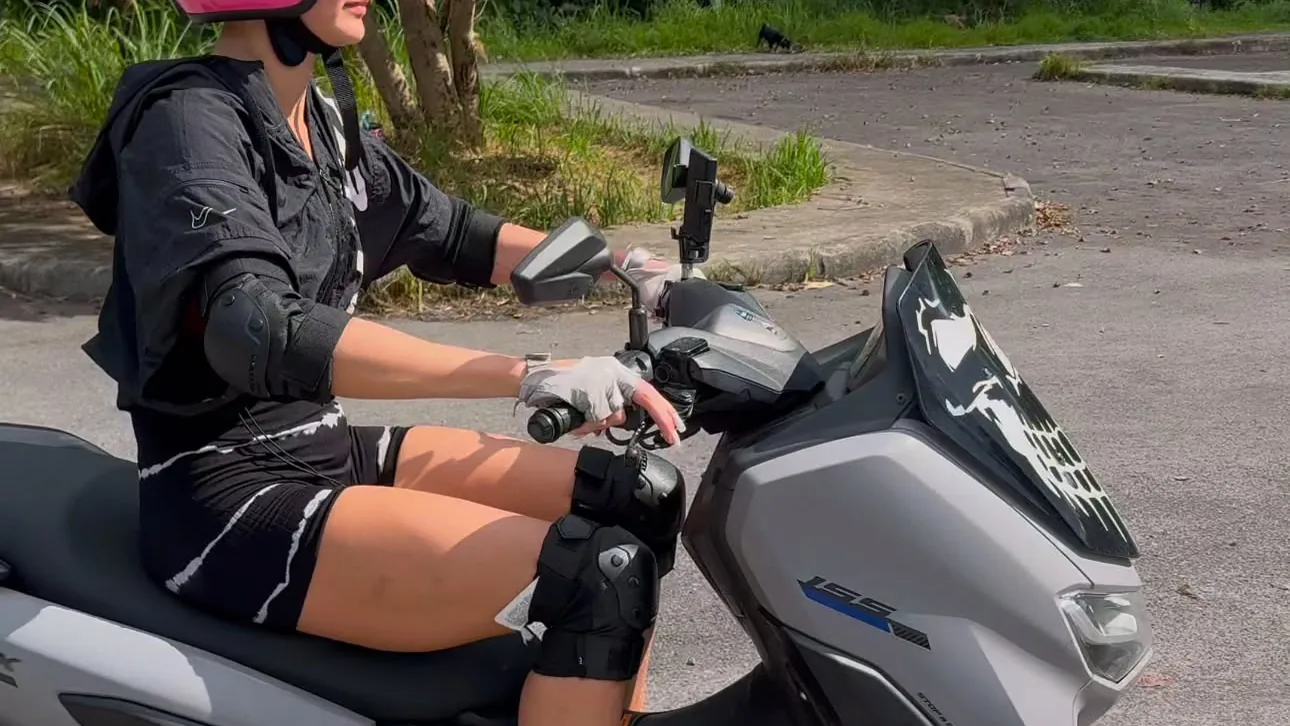
Scooter lesson prices
Transfer hotel ↔ training ground: south $5, north $10, once for the first lesson. Helmet and gear provided. 07:00–18:00, 7 days a week.
Most people who rent a scooter on their first day in Phuket have never ridden one. They get a two-minute explanation in the rental shop car park, pull out onto a road where everyone drives on the left, and hope. Our scooter lessons in Phuket are built for exactly that person: two hours with an instructor on a closed training ground, then quiet streets, then real city traffic, then a mountain pass. You learn to ride a scooter in Phuket on the instructor's bike, in a helmet and protective gear, before you ever sign a rental contract or hand over a deposit.
Who these lessons are for
Almost nobody who books a lesson is a biker. The usual student is one of these:
- A complete beginner who has never sat on anything with a throttle and wants to ride around Rawai or Bang Tao without fear.
- Someone with a car licence from home who understands traffic perfectly well but has never balanced a heavy machine at walking pace.
- A rider who last touched a scooter ten years ago in a different country and wants a supervised refresher before renting.
- A couple where one person usually drives and the other wants to be able to take over on a long day out.
- A long-stayer who plans to apply for a Thai driving licence and wants to pass the practical test on the first attempt.
If you already ride confidently at home, you probably do not need a full course. One lesson focused on left-hand traffic, Phuket's hills and local habits is usually enough. If you are still deciding between four wheels and two, read our piece on car vs scooter safety in Phuket first; for families and nervous drivers a car is often the better choice, and the same school teaches that too on the car driving lessons page.
How a lesson is built
Every motorbike lesson lasts two hours. That length is deliberate: the first part of any session goes on warming up and remembering what your hands and feet are supposed to do, and real progress happens in the second hour. You ride the instructor's bike, so there is no rental, no deposit and no worry about scratching somebody else's paint while you are learning. Helmet and protective gear are provided. Instructors speak English and Russian, and lessons run seven days a week from 07:00 to 18:00, so an early-morning slot before the heat and the traffic is always an option.
The programme follows the same route for everyone: closed training ground, then city traffic, then a mountain pass such as the Patong hill or the road up to the Karon viewpoint. How far along that route you get depends on how many lessons you take and how fast you pick it up. Here is what each stage normally contains.
Lesson 1: the training ground
The first two hours happen entirely on a closed ground with no other traffic. You start with the basics that rental shops skip: how to get on and off without dropping the bike, where the side stand is, how the throttle responds when you twist it a little versus a lot, and why you brake with both hands. Then slow-speed control: riding in a straight line at walking pace, figure eights, tight turns in both directions, looking where you want to go rather than at the front wheel. You practise the emergency stop until it is boring, learn to start from a stop on a slope without rolling back, and finish by riding laps of the ground while using mirrors, indicators and the horn without thinking about them. For most beginners this lesson is the difference between fear and curiosity.
Lesson 2: into the city
Once slow control is automatic, the instructor takes you off the ground and onto quiet residential streets, then progressively busier roads. This is where left-hand traffic becomes real: you learn to keep to the far left lane as motorbikes are expected to, how to use the dedicated U-turn pockets instead of turning across traffic, how roundabouts flow when everything goes clockwise, and how to position yourself around parked cars, stray dogs and pickup trucks that stop without warning. You ride into a petrol station and fill up, park in a row of other scooters without blocking anyone, and learn to read what the riders around you are about to do. The instructor rides alongside or just behind you the whole time.
Lesson 3 and beyond: the mountain pass
Phuket is not flat. The road between Patong and Kathu climbs and drops steeply with hairpin bends, and the viewpoint roads above Karon and Kata are similar. On a scooter these roads demand skills a city rider never develops: using engine braking on long descents instead of holding the front brake until it fades, choosing a wide line through blind curves, dealing with a tour bus coming the other way, and spotting sand or wet leaves on the exit of a corner. Students on the five-lesson package ride one of these passes with the instructor, usually the Patong hill. After that, there is nowhere on the island you cannot ride.
Prices: automatic scooter or manual motorbike
A lesson on an automatic scooter, the kind almost every rental shop offers, costs $60 for two hours. A lesson on a manual-gearbox motorbike with a clutch and foot-shifted gears costs $90, because the bike itself and the skill set are different. You can pay in Thai baht, US dollars, Russian roubles or USDT.
For automatic scooters there are two packages. Three lessons cost $165 instead of $180 and cover the training ground and city traffic. Five lessons cost $250 instead of $300 and take you all the way from the ground, through the city, to the mountain pass. The packages are for automatic scooters; if you want a manual course, say so in the request and the manager will put a plan together with you.
| What you get | 1 lesson | 3 lessons | 5 lessons |
|---|---|---|---|
| Price (automatic) | $60 | $165 (instead of $180) | $250 (instead of $300) |
| Time on the bike | 2 hours | 6 hours | 10 hours |
| Where you ride | Closed training ground; a short street run if you progress quickly | Training ground, then city traffic | Training ground, city traffic, mountain pass |
| Best for | Experienced riders adapting to left-hand traffic; a first taste for the curious | Beginners who will ride between the beaches and the town | Beginners who want to ride the whole island, including the Patong hill |
| What you can do after | Balance, brake and manoeuvre at low speed | Ride confidently in traffic on flat roads | Ride confidently anywhere on Phuket |
Gear, bike and transfer
The school provides the helmet and protective gear, and you ride the instructor's bike. Come in closed shoes and long trousers rather than flip-flops and shorts; it is the same advice you will want to follow once you rent your own scooter. Bring water and, if you burn easily, a long-sleeved top: a two-hour lesson in the Phuket sun is a real workout.
If your hotel is far from the training ground, the school arranges a transfer from the hotel to the ground and back: $5 if you are staying in the south of the island and $10 in the north. The transfer is paid once, for the first lesson. For the following lessons you agree the meeting point with the manager; many students meet the instructor directly at the ground.
Training grounds across Phuket
You do not have to cross the island for your lesson. The school uses training grounds in six areas:
- Mai Khao — the far north, close to the airport and the quietest beach on the island.
- Bang Tao — the north-west coast, convenient for Laguna, Surin and Layan.
- Kathu — the centre of the island between Patong and Phuket Town, right at the foot of the Patong hill.
- Phuket Town — for people staying in the old town or working in the city.
- Chalong — the south-centre, handy for Kata, Karon and the Chalong pier area.
- Rawai — the far south, for Nai Harn, Rawai and Ya Nui.
When you send a request, say where you are staying and the manager will pick the nearest ground and the right transfer rate.
Why Phuket roads need a lesson at all
Scooters are not hard. Phuket is. Four things make the island different from the roads most visitors learned on.
Left-hand traffic. Everything mirrors what you know: you look right first at junctions, roundabouts flow clockwise, and motorbikes keep to the far left lane. The popular idea that you may always turn left on a red light is a myth. A left turn on red is allowed only where a sign or a green arrow says so, it costs 200–500 baht if you do it anywhere else, and even where it is allowed you must give way to everyone. U-turns are made in dedicated U-turn pockets, not from the middle of the road. Lane filtering between queued cars is formally illegal; it is not enforced, but a beginner should not rely on it.
Hills. The Patong hill, the Karon viewpoint road and the route to the Big Buddha are steep enough that rental scooters overheat their brakes on the way down. You need to know engine braking before you need it.
Rain. Tropical downpours arrive in minutes, flood the left lane first and leave a film of sand and oil on corners. Wet-weather braking is part of the lesson, not an optional extra.
Checkpoints and the rules behind them. Phuket police run permanent checkpoints at Chalong Circle in the mornings and around Karon and Kata in the evenings and at weekends. Riding without a helmet costs up to 2,000 baht and a penalty point; if your passenger has no helmet either, the rider pays double, up to 4,000 baht in total, and since 1 June 2025 police issue the maximum fine nationwide. Riding without a licence or without the right category is up to a month in jail or a 1,000-baht fine by law, and 200–1,000 baht in practice at a checkpoint. The detail most tourists miss: category A is mandatory for any scooter, even a 110–125 cc automatic, and without it insurers refuse to pay out after an accident, citing the wrong licence category. Our guide to Phuket checkpoints explains where and when they appear, and the Thai driving licence page explains how the school helps you get category A in 5–7 working days.
Scooter lessons in Phuket: how to book
- Fill in the request form at the bottom of this page: your name, where you are staying, whether you want an automatic scooter or a manual bike, and roughly when you would like to start.
- The school manager replies the same day, confirms a date and a time between 07:00 and 18:00, and suggests the nearest training ground.
- If you need the transfer, the manager arranges it for the first lesson at $5 (south) or $10 (north).
- Come in closed shoes and long trousers; the helmet and protective gear are waiting for you.
- After the first lesson you and the instructor decide together whether one lesson was enough or whether a three- or five-lesson package makes sense.
The full list of what the school offers — motorbike, car and licence assistance — is on the driving school hub page.
Request a lesson — the school manager replies the same day.
Frequently asked questions
Can I learn to ride a scooter in Phuket if I have never ridden before?
Yes. Most students are complete beginners, and the first lesson takes place entirely on a closed training ground with no other traffic. You ride the instructor's scooter, and the helmet and protective gear are provided.
How much do scooter lessons in Phuket cost?
A two-hour lesson on an automatic scooter costs $60, on a manual-gearbox motorbike $90. Packages for automatic scooters: 3 lessons $165 (instead of $180) and 5 lessons $250 (instead of $300). You can pay in THB, USD, RUB or USDT.
How long is one lesson and how many do I need?
Every lesson lasts two hours. Experienced riders usually need one lesson to adapt to left-hand traffic; beginners take three lessons for the ground and the city, or five to add the mountain pass.
Do I need my own scooter or helmet?
No. You ride the instructor's bike, and the school provides the helmet and protective gear. Just come in closed shoes and long trousers.
Where in Phuket are the lessons held?
The school uses training grounds in Mai Khao, Bang Tao, Kathu, Phuket Town, Chalong and Rawai. The manager picks the ground nearest to your hotel after you send a request.
Is the hotel transfer included?
The transfer from your hotel to the training ground and back costs $5 in the south of the island and $10 in the north, paid once for the first lesson. For later lessons you agree the meeting point with the manager.
Do the instructors speak English?
Yes, instructors speak English and Russian. Lessons run seven days a week from 07:00 to 18:00.
Which licence do I need to ride a scooter in Phuket?
Category A is mandatory for any scooter, even a 110–125 cc automatic; without it insurers refuse to pay after an accident. The school helps you obtain a Thai category A licence for 11,000 baht in 5–7 working days.
What is the difference between the automatic and manual lesson?
The automatic lesson ($60) is on a scooter like the ones rental shops offer: twist the throttle and go. The manual lesson ($90) is on a motorbike with a clutch and foot-shifted gears, which takes longer to master.
Rent a scooter in Phuket
BikesBooking
- ✓Book a scooter before you arrive
- ✓Compare several rental shops at once
- ✓No passport left as a deposit — check terms
Travel insurance for Thailand
EKTA
- ✓Policy online in a few minutes
- ✓Check the scooter / active-sport option
- ✓Medical cover for Thailand hospitals